How to Forgive Someone Who Isn't Sorry
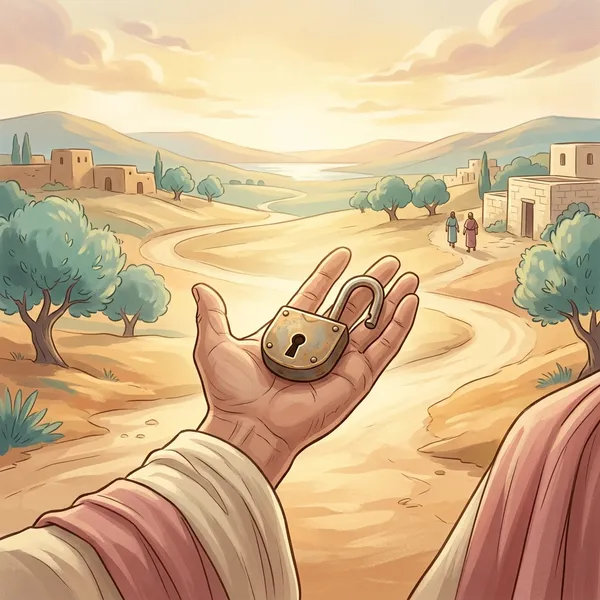
She knew what she had done. And she never said a word about it.
You probably know that specific ache. The person who hurt you most, the one you trusted, moved on without a backward glance. No apology, no acknowledgment, no moment of reckoning. And you are left holding the weight of it, trying to figure out what to do with something that was handed to you without your consent.
Before anything else, someone needs to say this to you. What happened was not okay. It should not have happened. And if the people around you have stayed quiet, let me say it plainly: I'm sorry. You deserved better than that.
Now, about forgiveness. And specifically, how to forgive someone who isn't sorry, which is the harder version of the question nobody warns you about.
The lies we believe about forgiveness without an apology
There are things that well-meaning people say about forgiveness that are genuinely harmful. These ideas feel spiritual, but they set you up to fail before you even start.
The first one is that forgiveness means forgetting. It does not. When you have been deeply wounded, you are not going to wake up one morning with no memory of it. God does not expect that. Even in Revelation, when all things are made new, Jesus will wipe away every tear, which means tears are still there all the way until the end. Forgetting is not the goal.
The second lie: if it still hurts, you have not really forgiven. A pastor I heard put it this way, telling someone that is not pastoral, it is cruel. Pain is not evidence of unforgiveness. Pain is evidence that something real was taken from you. Grief and forgiveness can exist in the same chest at the same time.
Third: forgiveness is a one-time decision that resolves everything. A woman once described how she had forgiven her husband for a betrayal that happened decades before. But sometimes she would see him talking to someone in a hallway and the wave would hit her again, fresh, and she had to choose to forgive once more. Not for the first time. Forgiveness is more like a direction you keep walking than a door you walk through once.
Fourth, and this one matters for safety: forgiving someone does not mean returning to them. Trust is rebuilt, not owed. Forgiveness and trust are separate things. One person can forgive. It still takes two people, and actual change, to reconcile. Some people need to be loved from a distance, and forgiving them does not mean placing yourself back in harm's way.
What forgiveness is, and why it is not for them
One thing every honest teacher of this material agrees on: forgiveness does not primarily benefit the person who hurt you. They may be sleeping fine. You are the one at 2 a.m. replaying the conversation, rehearsing what you should have said, carrying something they set down and walked away from.
A preacher I heard described bitterness as drinking rat poison and waiting for the rat to die. The image is blunt, but it is accurate. Unforgiveness does not punish the person who wronged you. It keeps you frozen in the moment they wronged you, unable to move forward into the life God has for you.
The word for forgiveness in Greek literally means to let go. Not to approve of, not to minimize. To release. You stop trying to collect the debt yourself. Not because the debt is not real. It is real. But because you are not the right one to collect it. Keeping an internal ledger of what they owe you is exhausting, and loving the way Jesus loved means releasing that record, not because they deserve it, but because you were released first. "Avenge not yourselves, beloved, but give place unto the wrath of God: for it is written, Vengeance belongeth unto me; I will recompense, saith the Lord" (Romans 12:19, ASV).
That is not a small promise. God says: I see what was done. I will settle accounts. You do not have to.
Forgiveness is a decision before it is a feeling
Here is where most people get stuck. They wait to feel ready. They want the feeling of release before they make the decision. But it does not work in that direction. Forgiveness is a decision. The feeling tends to follow, sometimes much later.
There is a true story that has stayed with me. Corrie ten Boom, who survived Ravensbruck concentration camp and told the story in her book The Hiding Place, found herself years after the war face to face with one of the guards who had tormented her. He had become a Christian, stretched out his hand, and asked her forgiveness.
She could not make herself reach back. Her sister had died in that camp.
But she prayed: I cannot do this. I can lift my hand. You supply the feeling. And she did. What she described next was warmth flooding through her, starting at her shoulder, moving into their joined hands. Not her love. She was clear on that. Something she could not have manufactured.
Forgiveness is an act of the will. The will can move when the heart is still cold. You pray with open hands and ask God to bring the feeling up behind the decision. That is not dishonesty. That is faith.
The short quiz below can help you see where you actually are in this.
How to forgive someone who hasn't apologized
Start with honest prayer. Not polished prayer. Tell God exactly what happened, what it cost you, and that you are struggling to let it go. The Psalms are full of prayers that sound nothing like a greeting card. God can handle the raw version.
Then there is the act itself: releasing the debt. In your own words, you say to God: I am releasing this person from their debt to me. I am trusting you to handle what I cannot. This is not a feeling you perform. It is a declaration made with your will, sometimes with clenched teeth.
One more thing that sounds strange until you try it: praying for the person who hurt you, genuinely. Not as a way of excusing what they did, but as a practice that loosens bitterness's grip. I have done this, and the shift is real. You cannot sincerely pray good things over someone and stay locked in contempt. The two do not hold together.
If you were betrayed by a close friend, one of the sharpest specific griefs there is, take some comfort in this: Jesus was betrayed by twelve of his closest people. Some denied him, one sold him, all scattered when it got dangerous. He knows exactly what it feels like to have trust placed and then broken by the people at the table with you.
Why we forgive
"Be ye kind one to another, tenderhearted, forgiving each other, even as God also in Christ forgave you" (Ephesians 4:32, ASV).
That is the basis. Not willpower, not emotional resolution, not the other person's repentance. The basis is what God already did for you, at a cost you could not have paid yourself.
One teacher put it plainly: there is no one on earth who has sinned against you as much as you have sinned against God. That is not meant to minimize what was done to you. It is meant to locate you in the larger story. You received a forgiveness you had not earned and could not buy. That changes what you are able to extend to someone else, not because you feel like it, but because you understand what you have already been given. It also matters that the shame or self-doubt the wound left behind is not the whole of who you are, and the article on identity after failure and what God says about it is worth reading alongside this one.
The apology may never come. That is a real possibility, and it is painful to sit with. Learning to forgive someone who isn't sorry is not a smaller task than forgiving someone who is; in some ways it is larger, because there is no closure from outside to lean on. But the peace that forgiveness opens up does not require the other person to do anything. It requires only a decision, made perhaps many times, to release the debt to the only one capable of settling it perfectly.
He heals the broken in heart, and the healing does not wait for the one who broke it.